From Factory Floor To Final Destination: The Life Of A Shipping Container
February 11, 2026
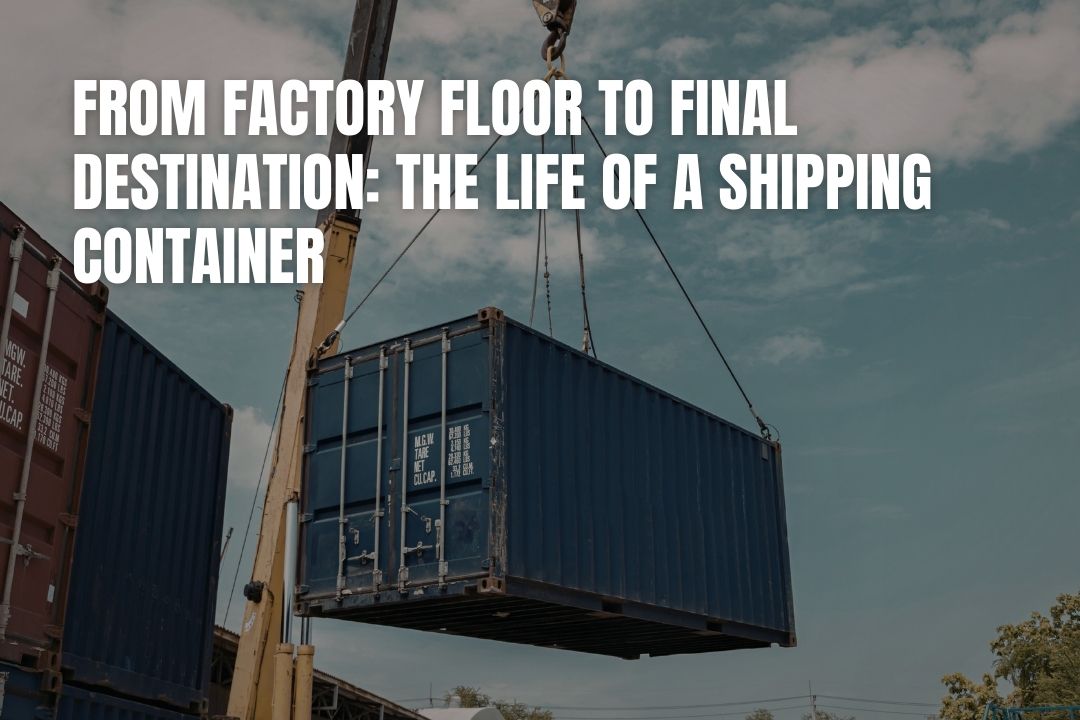
Every day, millions of goods cross oceans and borders inside steel boxes that rarely draw attention. Shipping containers form the backbone of global trade, moving raw materials and finished products between continents with remarkable efficiency. Their journey reflects how modern commerce connects producers, ports, and consumers across vast distances.
Key Takeaways on The Life Of A Shipping Container
- Origin and Documentation: A container's journey begins at the manufacturing source where goods are packed. Preparing accurate documentation at this initial stage is vital to prevent delays later on.
- Port Operations and Sea Transit: At the port, complex logistics involving cranes and advanced scheduling systems manage the loading of containers onto ships. During the ocean voyage, shipping lines actively monitor conditions to ensure a smooth transit.
- Customs Clearance: Upon arrival at the destination port, every container must go through customs. This process involves checking documents and sometimes physical inspections to ensure compliance with trade laws.
- Inland Distribution: Once cleared, containers are transported inland via truck or rail. They often go to distribution centres where goods are sorted before their final delivery to retailers or industrial sites.
- End of Life Cycle: After a container is emptied, it is not simply discarded. It might be returned to a port for another shipment, stored, or repurposed for innovative uses like storage or even construction.
Register Your LLC
Company Registration
START NOW
Origin at the Manufacturing Source
The journey of a shipping container often begins at a manufacturing site or agricultural facility. Once goods are produced, they are packed into standardized containers designed to protect cargo and simplify handling. This standardization allows containers to move easily between trucks, trains, and ships without unloading their contents.
Before departure, documentation is prepared to outline cargo details, destination, and compliance requirements. Accurate paperwork at this stage prevents delays later in the journey. Containers are then sealed and transported to a nearby inland terminal or port, typically by truck or rail.
Port Operations and Ocean Transit
At the port, containers enter a tightly coordinated environment. Cranes lift them from trucks or railcars and stack them in holding areas until loading begins. Advanced scheduling systems determine when each container moves onto a vessel, balancing weight distribution and route planning.
Once aboard a cargo ship, containers may travel thousands of miles across open water. During this phase, the container itself remains unchanged, but the logistics behind it continue to evolve. Shipping lines monitor vessel location, weather conditions, and port congestion to adjust arrival times and reduce disruptions.
Arrival and Customs Clearance
After reaching the destination port, the container enters another critical phase. Customs authorities review documentation, assess duties, and conduct inspections when required. This step ensures compliance with trade regulations and safety standards.
Delays can occur if paperwork is incomplete or if inspections reveal concerns. Efficient clearance depends on coordination between importers, freight forwarders, and port officials. Once cleared, the container is released for inland transport.
Inland Transport and Distribution
Following customs approval, the container moves inland by rail or truck. Distribution centers often serve as the next stop, where goods are unpacked, sorted, and prepared for final delivery. In some cases, containers travel directly to large retailers or industrial sites without intermediate storage.
This leg of the journey highlights the importance of skilled logistics professionals who manage timing, capacity, and cost. Many companies rely on specialized supply chain management recruitment agencies to identify talent capable of overseeing these complex flows and adapting to market demands.
Return, Reuse, or Repurpose
After unloading, containers do not simply disappear. Empty units may be returned to ports, repositioned for new shipments, or stored until demand rises. Some containers are retired from shipping and repurposed for storage, construction, or modular facilities, extending their useful life beyond transport.
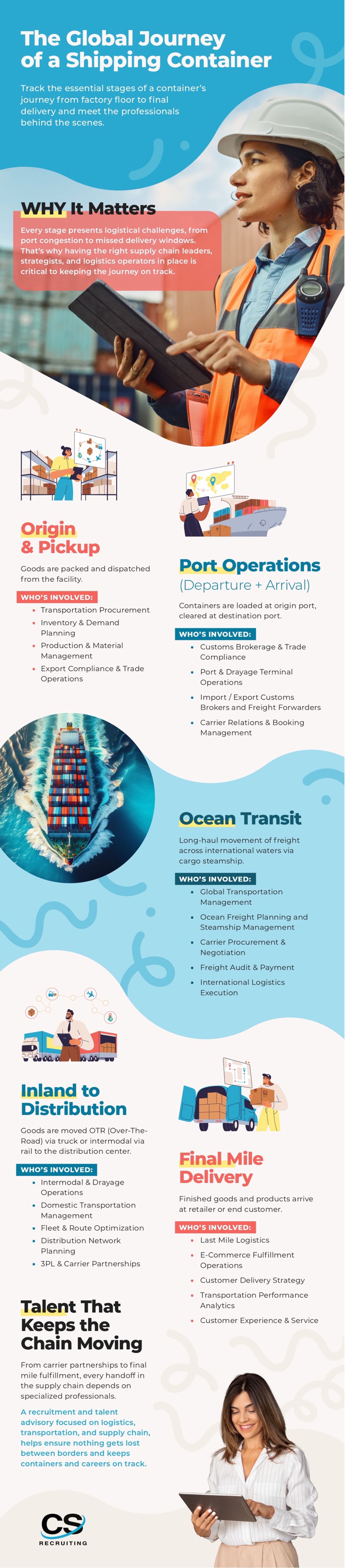
The global journey of a shipping container is a quiet but powerful process. From factory floors to final destinations, these steel structures enable trade at a scale that shapes economies and everyday life. Understanding their path offers insight into the systems that keep modern business moving. Feel free to look over the infographic below to learn more.
FAQs for From Factory Floor To Final Destination: The Life Of A Shipping Container
Why is container standardisation so important?
Standardisation is the key to efficiency in global shipping. It means any container can fit on any compatible truck, train, or ship worldwide, so you don't have to unload and reload the actual goods at each transfer point. This saves an incredible amount of time and money.
What causes delays at a container's destination port?
The most common cause of delay is the customs clearance process. If the paperwork is incomplete or incorrect, or if an inspection raises concerns about the cargo, the container will be held until the issues are resolved. This highlights why accurate documentation from the start is so critical.
What happens to shipping containers after they are emptied?
An empty container has several possible futures. It can be sent back to a port to be filled with new goods for another journey, stored in a depot until it's needed, or retired from shipping. Retired containers are often repurposed for storage, housing, or other construction projects.
Who manages the complex journey of a shipping container?
Skilled logistics professionals and freight forwarders oversee the entire process. They coordinate everything from port schedules and customs paperwork to inland transport. Many businesses work with platforms like Storific to manage these complex supply chain flows effectively.