Building A Greener Future For Pop-Up Retail Through Sustainable Practices
November 17, 2025
Pop-up retail has surged in popularity as brands look for new ways to connect with customers. These short-term storefronts can be creative and cost-effective, but they also generate environmental concerns. Frequent setup and teardown, temporary materials, and rapid waste accumulation can leave a larger footprint than many businesses expect. Thoughtful planning can reduce these impacts and help brands strengthen their commitment to social responsibility.
Key Takeaways on Sustainable Pop-Up Retail
- Smarter Material Choices: You can significantly reduce waste by opting for reusable furniture, modular displays, and recycled materials instead of disposable items that end up in landfills.
- Energy and Location: Your choice of venue matters. Select locations with energy-efficient infrastructure and good natural light, and consider proximity to your supply chain to lower transport emissions.
- Reusable Construction: For the structure itself, use modular walls and collapsible frames. These systems minimise construction waste and can be reconfigured for future events, saving both resources and money.
- Ethical Sourcing: Sustainability extends to your partners. You should work with vendors who use eco-friendly packaging and follow fair labour practices to build a truly responsible brand image.
- Positive Community Impact: Your pop-up can leave a lasting positive impression. Partner with local non-profits or feature local makers to contribute to the community that hosts your event.
Register Your LLC
Company Registration
START NOW
Reducing Waste Through Smarter Material Choices
One of the biggest sustainability challenges in pop-up retail is material waste. Many installations rely on inexpensive fixtures, signage, and décor meant to last only a few weeks. After the event ends, these components often end up in landfills. Choosing reusable furniture, modular displays, or recycled materials minimizes waste and keeps valuable resources from being discarded.
Fabric backdrops, refurbished shelving, and rental décor also provide environmentally friendly alternatives. Brands that operate multiple pop-ups throughout the year can invest in durable, transportable pieces that move from one activation to another. Even small decisions, such as avoiding single-use plastic signage or using energy-efficient lighting, contribute to a more responsible setup.
Energy Consumption and Location Selection
Energy use is another major factor in the environmental impact of pop-up stores. Lighting, climate control, and digital displays consume significant power, especially in unconventional retail spaces. Selecting venues with efficient infrastructure helps reduce energy demands. When possible, brands can choose locations with natural lighting or offer outdoor experiences that require fewer electrical resources.
Transportation also plays a role. The carbon footprint increases when materials and staff travel long distances to reach a site. Choosing pop-up locations near existing supply chains or distribution centers lowers transportation-related emissions and streamlines operations.
Reusability in Temporary Construction
Pop-ups often rely on temporary construction to create customized environments. Modular walls, collapsible frames, and reusable flooring systems can help reduce waste and speed up assembly. Businesses planning a temporary structure for events can choose materials that are lightweight and recyclable, reducing environmental costs. These solutions also make it easier to scale activations or replicate them in multiple markets without rebuilding from scratch.
Responsible Sourcing and Ethical Partnerships
Sustainable pop-up retail extends beyond materials and layout. Brands can strengthen their social responsibility by choosing vendors and partners committed to ethical production. This includes sourcing eco-friendly packaging, working with local artisans, and prioritizing suppliers who follow fair labor practices.
Food and beverage sampling can also be made more sustainable through compostable serveware, local sourcing, and clear recycling stations. Transparent communication about these efforts builds trust and encourages customers to participate in responsible practices.
Community Impact and Long-Term Value
Pop-ups can leave a positive mark on communities when brands approach them thoughtfully. Partnering with nonprofits, supporting local makers, or hosting educational workshops adds meaningful value beyond sales. These efforts help balance the environmental impact by contributing socially, economically, and culturally to the neighborhoods hosting the activation.
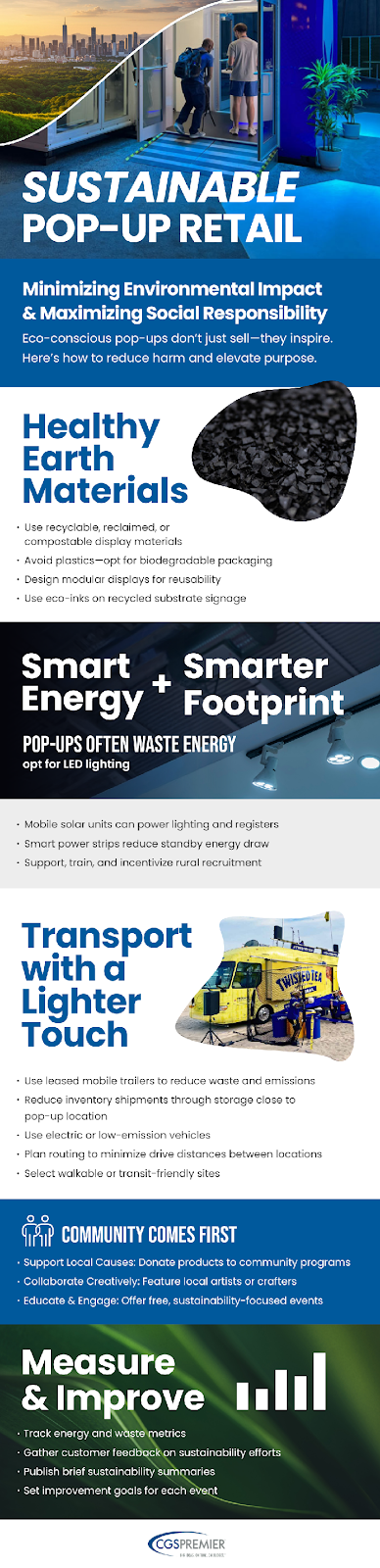
Sustainability in pop-up retail is entirely achievable with intentional planning. Through responsible choices, pop-up retail can be both innovative and sustainable, proving that short-term stores can leave a positive impact. Check out the infographic below to learn more.
FAQs for Building A Greener Future For Pop-Up Retail Through Sustainable Practices
What is the main environmental concern with pop-up shops?
The primary issue is material waste. Many pop-ups use temporary fixtures, signage, and decor that are thrown away after just a few weeks. This practice contributes a large amount of waste to landfills. Choosing reusable or recyclable materials is a key step to address this.
How can I make my pop-up shop more energy-efficient?
You can reduce energy consumption by selecting a venue with efficient lighting and climate control. Prioritise spaces with plenty of natural light, use LED bulbs, and consider an outdoor setup where possible to minimise the need for electrical power.
Are there sustainable options for building a temporary pop-up structure?
Yes, absolutely. You can use modular walls, collapsible frames, and reusable flooring systems. These solutions not only reduce waste but also make setup and teardown quicker and more efficient for multiple activations.
How do my business partners affect my pop-up's sustainability?
Your choice of partners reflects your commitment to sustainability. By working with suppliers who provide eco-friendly packaging, source materials locally, and adhere to ethical labour standards, you reinforce your brand's responsible values.
Can a short-term pop-up have a long-term positive impact?
It certainly can. By engaging with the local community through partnerships with non-profits, hosting educational workshops, or supporting local artisans, your pop-up can create meaningful social and economic value that lasts long after the event ends.